Vietnamese Craft Villages and the Stories Behind Handmade Gifts
- Sunday - 11/10/2026 13:13
- Close page
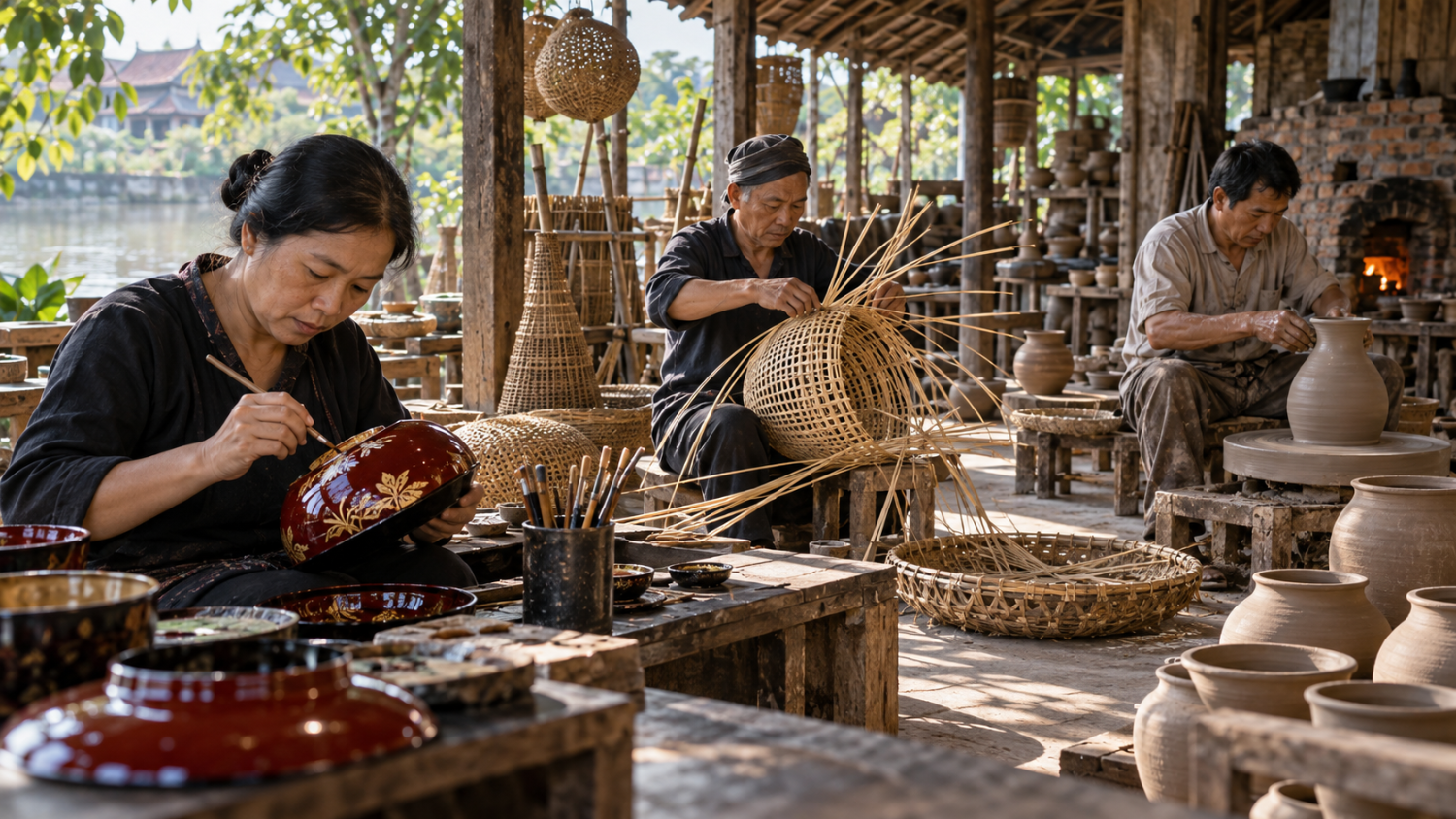
Vietnam’s craft traditions live in workshops, family courtyards and villages where skills pass from one generation to the next. A handmade object may involve weeks of shaping, drying, painting, polishing or weaving. Visiting these places changes the way travelers understand the souvenir they carry home.
Materials tell regional stories
Clay becomes ceramics in long-established pottery communities. Silk is woven and dyed into clothing and decorative textiles. Bamboo, rattan and water plants become baskets, bags and household objects. Lacquer artisans build color and depth through repeated layers. Folk painters preserve familiar scenes, beliefs and wishes through woodblocks, paper and natural pigments.
Watch the process with respect
Ask before entering a work area or photographing an artisan. Keep a safe distance from tools, kilns, wet lacquer and drying pieces. If a demonstration is offered, listen before touching materials. A workshop is a workplace, not only an attraction, and the maker’s time has value.Buy with informed appreciation
Ask who made the item, which materials were used and how long the process takes. Handmade work naturally varies; small differences can show the hand of the maker rather than a defect. Compare quality, but avoid treating skilled craft as a disposable bargain. Fair payment helps workshops train younger artisans and preserve local knowledge.Choose objects that can continue their story
Select pieces that fit your home, your recipient and your luggage. Learn basic care instructions for lacquer, silk, bamboo or ceramics. When giving the object, share the name of the craft and place where it was made. This turns a purchase into cultural memory and gives proper attention to the people behind it.Practical takeaway: Meet the maker when possible, learn the process and choose craftsmanship for its story as well as its appearance.